
The latest news from Ron & T of The Buffalo Wool Co. at RATH Ranch.
Forwarded this email? Subscribe here for more
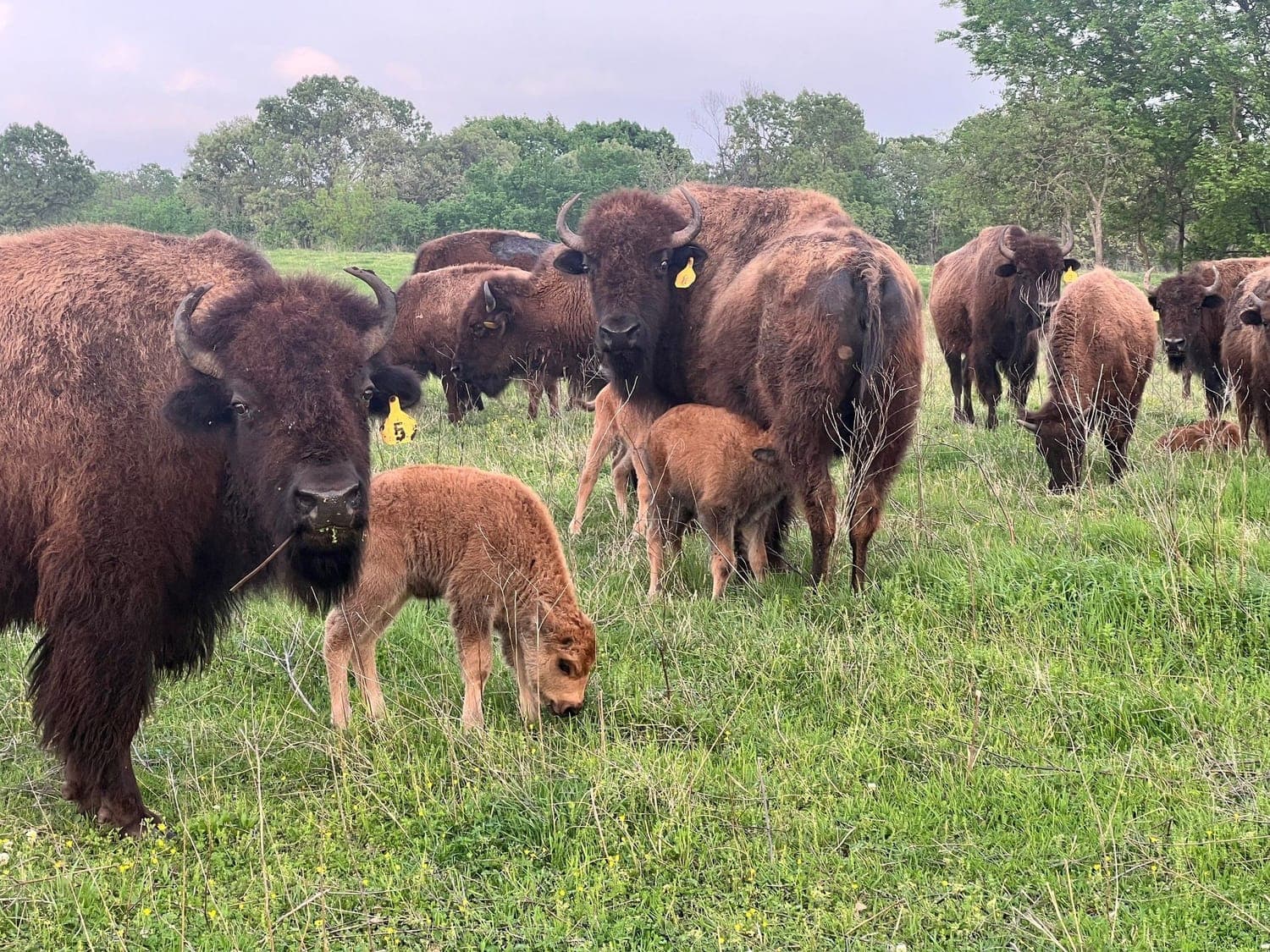
Happy Bison Month, it's Day 9 Friends!
Hope your week is going well, we are keeping pretty busy here, NanaCamp is in full swing, the kids are having fun, teaching them how to tan a hide right now. We have a lot of skills to cover here... they seem to love learning stuff.
Gonna be a quickie, I know we all have things that need doing... and today's piece combines a great bison conservation steward who is also a premier bison rancher. One of the coolest guys we know, and we are blessed to have some seriously cool friends. So only one story, and a short guide on how to grill a bison steak... cracked me up writing it, just being goofy... 4 am and not enough coffee seems to bring that out
So, let's continue celebrating Bison Month... it's been so much fun reading and learning how all our friends got started, what got them interested in raising bison, and some of the adventures they have had along the way. Still have quite a few more stories to share. It also reminds me why we we are on this mission and why we do what we do.
Hope you enjoy this one.
Hope you have a great day! From the Crew here at the BWC
Chad Kremer: Steward of the Bison
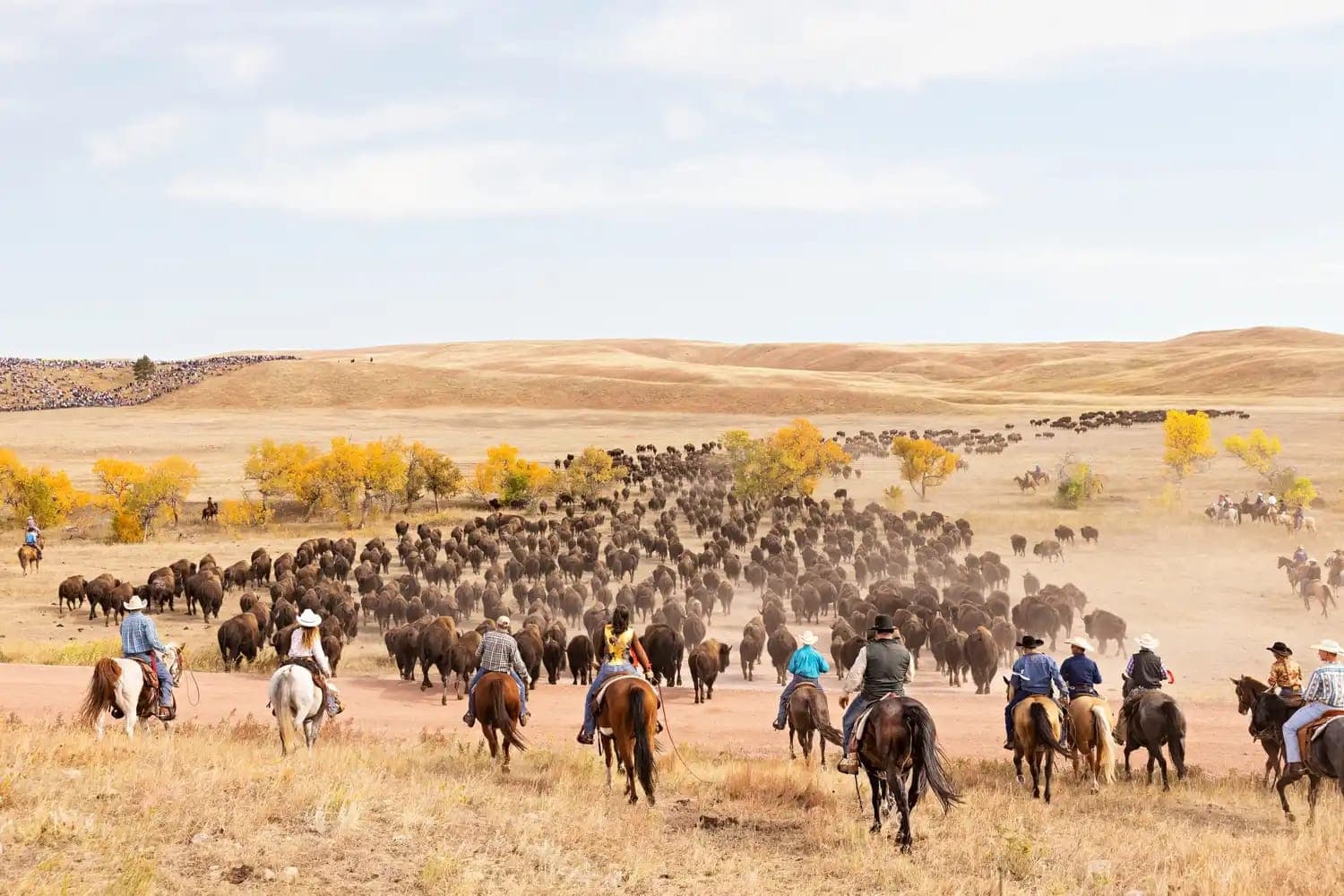
The annual Custer State Park Buffalo Roundup and Arts Festival attracts thousands of spectators.
Credit: Ackerman + Gruber
Guardian of the Black Hills In the sweeping grasslands and pine-covered hills of South Dakota, the thunder of hooves and the low rumble of a massive bison herd signal something timeless. For more than two decades, that iconic sound has been carefully managed, protected, and celebrated by one man: Chad Kremer, Bison Herd Manager at Custer State Park and co-owner of Kremer Buffalo Ranch. A true friend to those who know him, a dedicated family man, and widely regarded as one of the most knowledgeable bison experts in the country, Chad has carved out a life that blends cowboy grit, deep respect for wild animals, and a quiet passion for conservation. Whether he’s cracking a whip during the famous annual Buffalo Roundup or tending his own family herd in the eastern foothills of the Black Hills, Chad embodies what it means to live with bison rather than simply manage them.
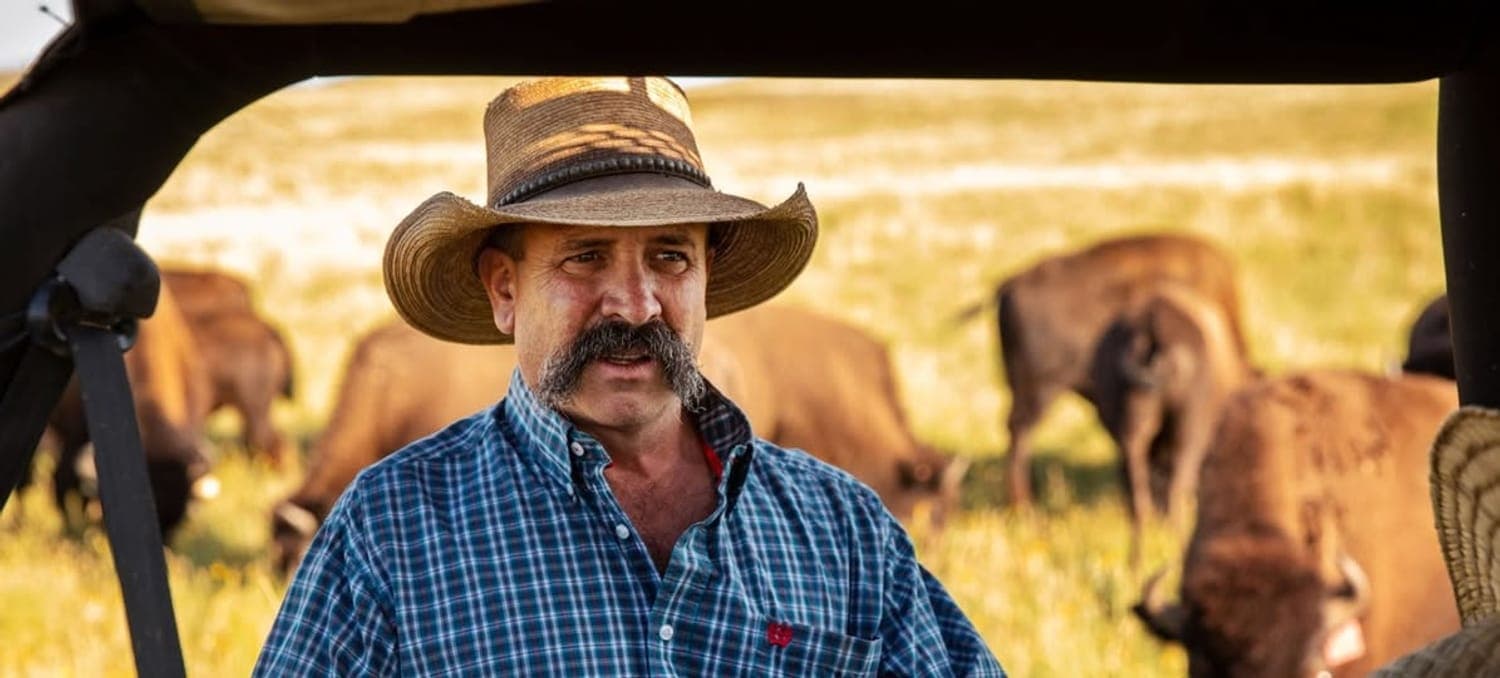
From Minnesota Farm Boy to Black Hills Cowboy, Chad didn’t grow up dreaming of bison. Raised on a farm near Reading, Minnesota (just north of Worthington), he helped with cattle but planned a different path. He attended South Dakota State University in Brookings, studying landscape design. Everything changed during a public speaking class. Assigned a 25-minute informative speech, Chad chose bison after spotting a sale notice for Blue Mounds State Park. That decision sent him down a rabbit hole of research, breeder visits, and his first trip to the legendary Custer State Park roundup in the late 1980s. By 1992 or 1993, he had purchased his first bison calves.He gained hands-on experience working for Rod Sather at Mosquito Park Enterprises (1996–2000, and there will be a piece on Rod soon) and then Chad spent time on a ranch in central Colorado. Then, in 2001, tragedy struck Custer State Park: the previous bison herd manager was killed in a horse accident. Chad stepped into the role — and never looked back.
More than 24 years later, he remains the steady hand guiding one of the most famous and visible bison herds in North America. Leading the Herd at Custer State ParkCuster State Park’s bison herd is legendary — a living symbol of the American West that draws thousands of visitors each year. Chad oversees a closed herd of roughly 1,200–1,500 animals, managing everything from health checks and population control to the spectacular annual Buffalo Roundup held every September.As head cowboy, he coordinates 50–60 horseback riders (core team members, volunteers, and invited guests) who help funnel the herd into traps and holding pastures for sorting, vaccinations, and culling surplus animals. The event is part spectacle, part serious conservation work. Surplus bison are auctioned to private ranches, helping sustain the species across the country while keeping the park’s land in balance.
Chad has modernized many practices to reduce stress on the animals. He’s a strong advocate for minimal hands-on management: give bison enough space, and they largely take care of themselves. “If you give them enough room and let them do their thing,” he has said, “they are usually just fine.” Yet he also understands their wild side — they can run 35 mph, jump fences, and react powerfully when pressured. His approach combines practical cowboy skills with genuine respect for them as prey animals that still carry ancient instincts.custerresorts.com
Kremer Buffalo Ranch: Family, Ethics, and Grass-Fed Excellence. Parallel to his park duties, Chad and his wife Suzi, the only person I know tougher than Chad (married in 1995) run Kremer Buffalo, a small, family-owned grass-fed bison operation in the eastern foothills of the Black Hills near Keystone and Fairburn, South Dakota. After nearly 30 years working with bison, they raise their animals ethically and humanely, allowing them to graze and behave as naturally as possible while helping restore native prairie.Their three children — Hannah, Grace, and Isaac — along with son-in-law Matt, are involved in the business.
The ranch sells quarters, halves, and whole carcasses, emphasizing quality meat from animals raised with care. Chad’s personal philosophy shines through: bison are strong, smart, and occasionally “belligerent,” but they command respect. The family website carries a clear warning — these are wild animals, not pets — reflecting Chad’s honest, no-nonsense approach.
Friends call him the “Buffalo Whisperer,” but Chad is quick to correct that it’s really about mutual respect. He doesn’t force the animals; he reads them, works with their nature, and earns their tolerance through consistency and patience.A Life of Dedication, Challenges, and Quiet Wisdom Chad’s journey hasn’t been without cost. Like any real cowboy, he’s taken his share of knocks — including a serious shoulder injury during a winter calf roundup when his horse slipped on ice, requiring surgery. (and when I posted our "Don't Pet the Buffalo Shirts" Chad sent me a pic of the shirt he was wearing when he had a close encounter of the bison kind. Yet he continues to ride, lead roundups, and stay in the thick of it. His expertise extends beyond the fence lines.
Ranchers, researchers, and fellow bison enthusiasts frequently seek his advice on handling, satellite ear tags, low-stress techniques, and the realities of working with partially wild animals. I recently cornered him and got him to volunteer to moderate a rancher online Q/A forum. He is always willing to listen, give solid advice, and no B.S. ever... he is just a great guy.
In recent years, when a tragic incident involving a bison bull occurred in the park, Chad spoke publicly with characteristic compassion and clarity, reminding people that these are prey animals reacting under pressure — not aggressors by nature.
Why Chad Stands Out, What makes Chad truly special isn’t just his résumé — it’s the combination of deep knowledge, genuine humility, and infectious passion. He’s the guy who can explain bison behavior in plain terms while standing in the middle of a moving herd. He is a past president of the National Bison Association, and really enjoyed serving with him. He just want everyone to succeed.
He’s the steward who fights for the animals’ well-being even when it’s unpopular. He’s the family man who has built a legacy his children are proud to carry forward. Whether he’s cracking his whip on roundup day, checking on calves at dawn, or sharing stories over coffee with fellow bison folks, Chad Kremer lives the life most people only dream about.
He doesn’t just work with bison — he understands them, protects them, and helps others do the same. In a world where so many wild things are disappearing, Chad represents something rare and valuable: a bridge between the old West and modern conservation, between practical ranching and profound respect for nature.He’s not just good at what he does. He’s one of the best — and for those lucky enough to call him a friend, he’s simply one truly awesome guy.
Buffalo Roundup 2026 Arts Festival Schedule
THURSDAY, SEPT 24 - 10:00 A.M. - 6:00 P.M.
FRIDAY, SEPT 25 - 10:00 A.M. - 7:00 P.M.
SATURDAY, SEPT 26 - 9:00 A.M. - 4:00 P.M.
How to grill a bison steak properly..
you would be surprised how many people don't know this, I do get asked frequently.
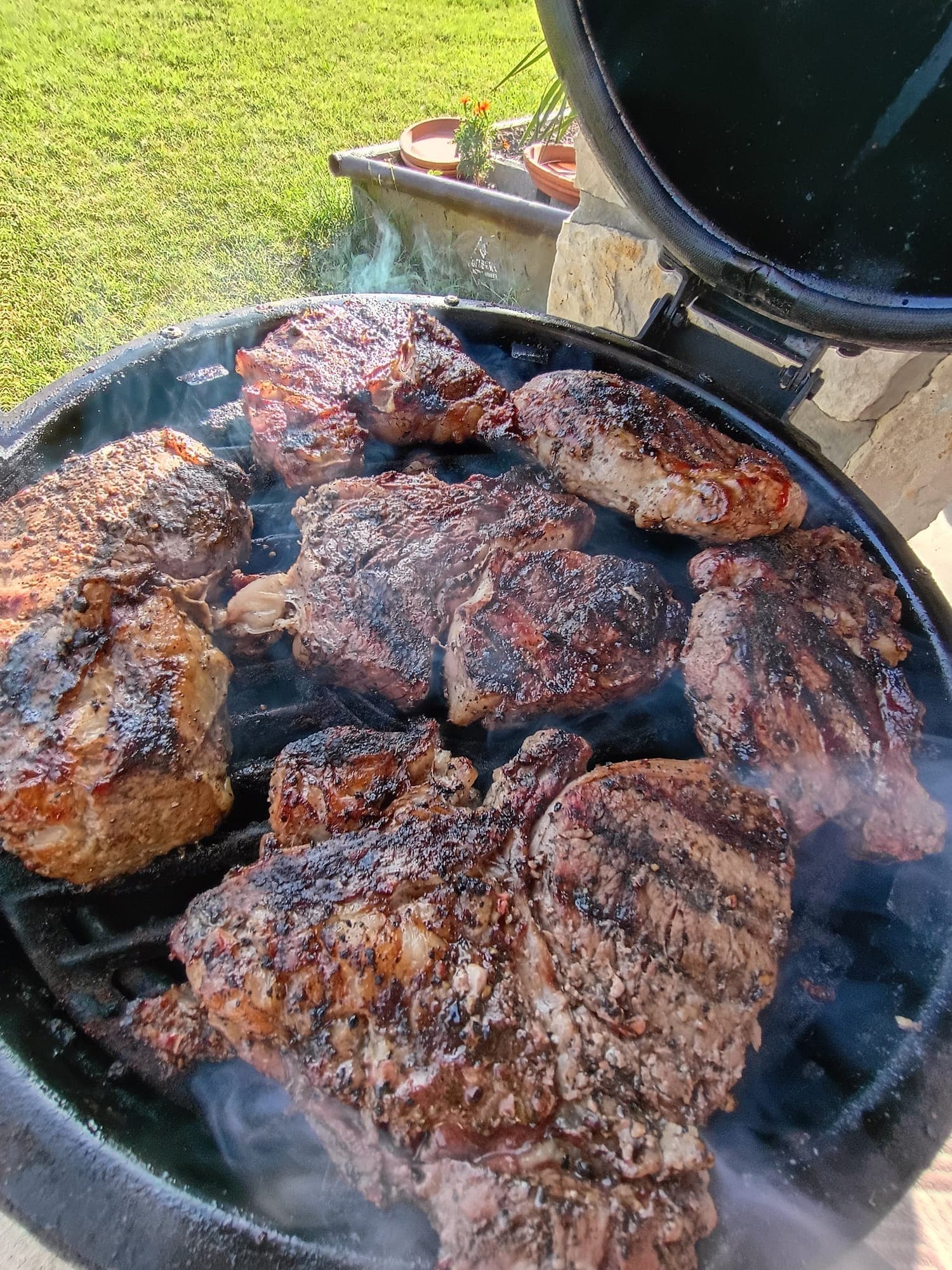
First, understand one crucial fact: bison did not spend its life standing around in a feedlot eating corn and scrolling through its phone. It was out there living its best life, dodging wolves and judging lesser animals. That means the meat is leaner than a CrossFit instructor in January. Treat it with respect… or it will punish you by turning into expensive jerky.
Step 1: Acquire the steak
Get a thick one. At least 1-1.5 inches. Anything thinner and you’re not grilling a bison steak, you’re just angrily reheating a frisbee. Pat it dry like you’re trying to remove evidence.
Step 2: Seasoning: Salt. Pepper. That’s it. The meat brings it own delicious flavor. Do not drown it in marinade. Bison didn’t survive on the prairie by tasting like teriyaki. It survived by being delicious on its own. If you feel the need to get fancy, you may add garlic powder, but do it with the quiet shame of someone who puts ketchup on a hot dog.
Step 3: The Grill
Get it screaming hot. 500–550°F. We’re not gently coaxing flavor here; we’re performing a controlled burn. If your grill isn’t hot enough to make your eyebrows nervous, you’re doing it wrong.
Step 4: Cook it
Throw the steak on. Sear 2–4 minutes per side for medium-rare. Flip it once. Only once. Bison has trust issues. Multiple flips make it feel harassed. Use a thermometer. Pull it at 130–132°F.
I repeat: 130–132°F.
Bison does not do “well done.” Well-done bison is what happens when you hate joy and flavor.
Step 5: Rest
Let it sit for 5–7 minutes before you dive in. This is non-negotiable. Cut into it early and the juices will escape faster than your willpower. You will be left with a dry, sad steak and a deep sense of personal failure.
Serving suggestions:
- Something simple. Roasted vegetables, a baked potato, or just standing over the cutting board eating it with your hands like a respectable caveman.
- Optional: a cold beer and the quiet satisfaction of knowing you didn’t ruin a $28 piece of meat.
Final warning:
If your bison steak starts making any kind of noise while cooking, you have either achieved sentience in your dinner or you’re hallucinating from standing too close to the grill. Either way, step back and reevaluate your life choices.

This post was published
Maybe you will also like
This is a link to a post. This is a link to a post.
 This is a link to a post.
Excerpt from post: Happy Bison Month yet again!
And we are back! Hope you enjoyed Dad's piece yesterday, those Sund…
This post was published
Excerpt from post: Hope you are having a great weekend!
Dad offered to write today piece for us, so you get a break f…
This post was published
Excerpt from post: Happy Bison Month!
We made it to the weekend! Hope you had a great week!
It's kind of a big day h…
This post was published